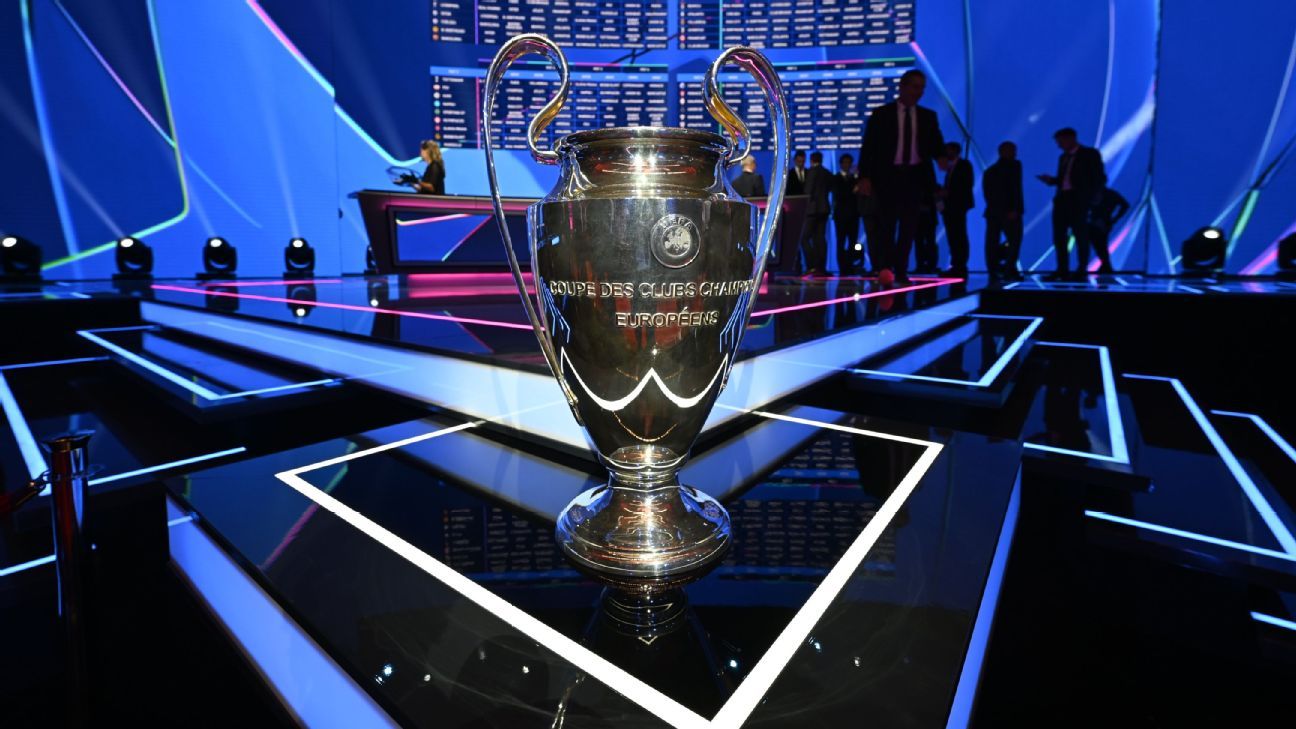

Has the Champions League final outgrown Europe? With commercial opportunity and growing logistical pressure, UEFA faces the prospect of staging its showpiece outside the continent — or restricting the final to a shrinking pool of compliant cities.
CONMEBOL has already signaled a willingness to play flagship club fixtures beyond its home continent to tap commercial value, and UEFA is confronting a practical problem: too few European cities and stadiums now meet modern final criteria. Last week UEFA disclosed that only Munich has formally bid to host the 2028 final, while London and Barcelona are the sole bidders for 2029. That low turnout highlights the difficulty of finding venues that satisfy exacting demands.
UEFA’s checklist is stringent. Hosts must offer a minimum capacity of roughly 65,000, space for secure perimeters, a large broadcasting compound and extensive corporate hospitality, plus major infrastructure such as an international airport, robust public transport and plentiful hotel rooms for fans, sponsors, media and VIPs. Many former hosts or typical football cities no longer pass those tests: Vienna, Amsterdam and Glasgow lack suitable stadia; Athens, Lisbon, Manchester and Cardiff struggle on hotel or transport; Baku has been judged inconvenient for many Western European fans. Geopolitical and security issues also rule out certain options — Moscow and Saint Petersburg have been excluded since Russia’s suspension from UEFA competition, and Kyiv remains off the table while conflict continues.
A handful of arenas still meet most needs. Wembley remains the near-perfect model with its 90,000 capacity, extensive corporate boxes and strong transport links. Renovated Camp Nou, Real Madrid’s Santiago Bernabéu and Atlético’s Metropolitano also tick many boxes; Munich’s Allianz Arena is acceptable despite a smaller hotel base. Recent allocations reflect the narrowing rota: the Allianz Arena hosted this year’s final, Wembley staged the 2024 decider, and the Metropolitano is set for 2027. Milan lost the 2027 rights after authorities could not guarantee San Siro would be ready; Inter and AC Milan plan to replace San Siro with a new 71,500-capacity stadium. Budapest will host the 2026 final at the 67,100-capacity Puskás Aréna, but that choice will put severe strain on the Hungarian capital’s single airport, ageing metro and limited hotel stock — Booking.com reported that around 92% of accommodation is already unavailable for the final weekend.
Insiders now warn UEFA may realistically have as few as four ‘risk-free’ venues for the foreseeable future: London, Madrid, Munich and Barcelona. If Budapest proves it can cope, similar-sized cities might be considered, but for the moment options are constrained. Paris is unlikely to be awarded a final until UEFA is satisfied lessons have been learned from the crowd-control failures at the 2022 final. Rome’s Stadio Olimpico has fallen behind contemporary standards and has not been used for a final since 2009.
That logistical squeeze has revived talk of taking the final beyond Europe. Could Real Madrid v Liverpool be played in New York, or Bayern v PSG in Chicago? U.S.-based promoters and executives point to a huge and growing American fan base and strong commercial appetite for marquee sporting events — evidence that the market could support staging a Champions League final overseas. The huge demand for global tournament tickets, such as millions already registering for next year’s World Cup, underscores potential spending power.
UEFA president Aleksandar Čeferin has said he prefers to keep European league fixtures at home, and while he acknowledged in 2023 that playing the Champions League final in the U.S. was technically possible, he has expressed caution. The cancellation of a proposed LaLiga match in Miami underlined the sensitivity around exporting domestic fixtures. Many observers believe UEFA will be careful about moving its most prestigious club match far from its traditional home.
There is also a commercial alternative: expand or reformat global club competitions instead of relocating the Champions League final. A more frequent or enlarged Club World Cup, held every two years, is one option floated by executives who see this as a cleaner way to globalize club football while keeping the Champions League anchored in Europe.
For now, UEFA says it has no plans to stage the Champions League final outside Europe. But it must reconcile two paths: accept a much smaller rotation of major European arenas able to meet modern requirements, or open the final to the global market and move one of football’s landmark events beyond the continent. With tightening stadium standards, transport and hotel constraints, and political and security limits ruling out historic venues, where the Champions League final will be played remains one of the sport’s biggest strategic questions heading into the next decade.