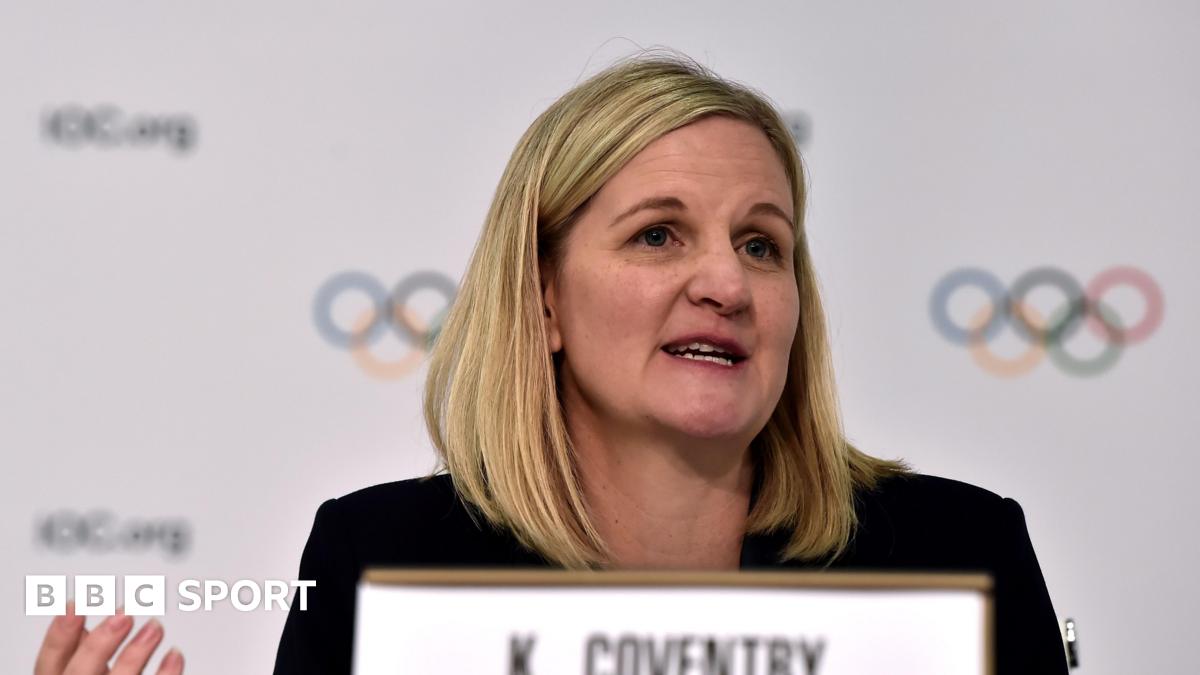

The International Olympic Committee has taken steps that bring it closer to imposing a blanket ban on transgender women competing in female categories across sports. IOC president Kirsty Coventry, who made the issue a campaign focus, set up a working group on protecting women’s sport. The IOC says its review is ongoing and no decisions have been taken, but BBC Sport sources report that after a briefing by the IOC’s medical and scientific director a general ban is likely to be announced in 2026.
Dr Jane Thornton presented early findings from a science-led review that, according to reports, indicate athletes who experienced male puberty retain physiological advantages even after lowering testosterone. Those findings have reinforced expectations of a new universal rule. Any broad prohibition is not expected before the 2026 Winter Olympics but could be introduced ahead of the 2028 Los Angeles Games. The committee’s review is also examining how to treat athletes with differences of sex development (DSD), though prospects for new DSD-specific rules remain less clear.
Historically, the IOC has left eligibility rules on sex and gender to individual international federations; many have permitted transgender women to compete in female events provided they meet testosterone thresholds. Since Coventry’s election she has said the IOC should “play a leading role,” that a working group of experts and federations would seek consensus, and that members showed strong support for protecting the female category.
Not all leaders agree on a single approach. The head of the International Paralympic Committee has opposed “blanket solutions” for transgender participation policies. Several sports bodies in recent years have moved to ban athletes who went through male puberty from elite women’s competition, citing concerns about fairness and safety—examples include World Aquatics and World Athletics. Trans rights advocates say such bans risk violating human rights and stress the importance of inclusion.
There have been national and political interventions as well. The article notes an executive order by US President Donald Trump this year barring transgender women from female categories and stating it would apply to the 2028 Olympics, with plans to limit visas for transgender athletes seeking to compete.
Individual cases that have shaped debate include New Zealand weightlifter Laurel Hubbard, the first openly transgender woman selected for the Olympics (Tokyo 2020), who failed to record a successful lift in the +87kg event. Thornton’s presentation also considered athletes with DSD—a set of rare conditions in which hormones, chromosomes or reproductive organs do not fit typical definitions of male or female. Some people with DSD are raised as female despite having testes or atypical chromosomal patterns.
This year World Athletics and World Boxing introduced genetic sex screening, arguing it is necessary to protect the integrity of women’s competition. Controversy arose at Paris 2024 after Algeria’s Imane Khelif won the women’s welterweight boxing gold, a year after being disqualified at the World Championships for reportedly failing a gender eligibility test. The IOC cleared Khelif and Taiwan’s Lin Yu-ting to compete under its policy that athletes are eligible for the women’s division if their passports identify them as female. Both fighters said they have always competed as women; there was no suggestion either is transgender. Some reports claimed the International Boxing Association said Khelif has XY chromosomes and speculated about a possible DSD similar to other high-profile cases, but the BBC said it could not independently confirm that detail.
The IOC’s review continues amid competing pressures: calls for a uniform, science-based policy to protect fairness in women’s sport, and warnings from rights groups and some sports bodies against broad exclusionary rules. No final decision has been announced.