
When Mauricio Pochettino took charge of the U.S. men’s national team, the clock became a constant constraint. He arrived with under two years until the U.S. co-hosts the 2026 World Cup with Canada and Mexico, and without the pressure—or clarity—of qualifying matches, his early work has largely been limited to friendlies and short training windows.
That lack of sustained contact has been magnified by a persistent injury list. Pochettino’s November squad reflects those struggles: expected starters such as Christian Pulisic, Chris Richards, Antonee Robinson, Malik Tillman and Timothy Weah are sidelined or still working their way back. Players fighting for places like Tristan Blackmon, Cameron Carter-Vickers and Alejandro Zendejas are also unavailable.
Juventus midfielder Weston McKennie was omitted from the call-up as he adjusts to new coach Luciano Spalletti, underscoring how little time the staff has to settle a preferred XI. After November there’s only one standalone international window in March before the pre-World Cup camp in May, so Pochettino has few opportunities left to experiment, evaluate and fine-tune.
Pochettino accepts the timeline without complaint. He has repeatedly said the squad must make the most of the available time, that excuses won’t help, and that he believes the team can be built despite injuries and limited minutes for many players. In his view, the core ideas and culture are in place, allowing new entrants to quickly understand expectations from those already familiar with his methods.
There are encouraging signs. Ricardo Pepi is back for the first time in almost a year and arrives in strong form after a crucial late goal in European competition. Alongside Pepi, Folarin Balogun and Haji Wright give the U.S. an enviable trio of in-form forwards competing for starting minutes—an advantage the team hasn’t enjoyed in some time.
Sergiño Dest has returned after missing the October window while rehabbing an injury, and fullbacks Alex Freeman and Joe Scally have been called in as well, creating more competition and options out wide.
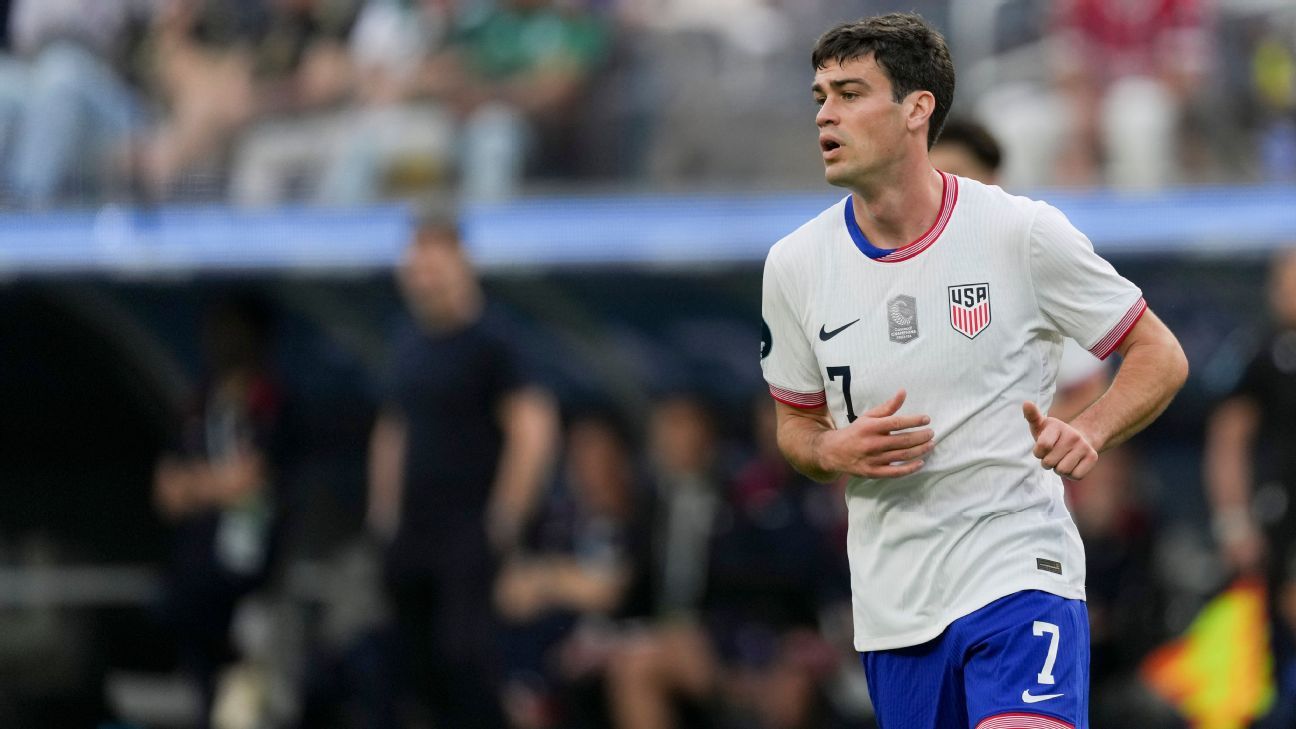
One storyline that will draw attention in November is Giovanni Reyna. His move from Borussia Dortmund to Borussia Mönchengladbach was supposed to be a fresh start, but injuries have limited him to just a sliver of playing time so far at his new club. Reyna logged 132 minutes since his transfer and made a brief 12-minute appearance in Gladbach’s recent 4-0 win over St. Pauli, where he was involved in the build-up to a late goal and showed some promising touches.
Pochettino spoke of Reyna first in terms of familiarity and then immediately shifted to the midfielder’s potential. The coach views this window as more than a chance to judge on-field production; it’s an opportunity to spend time with Reyna, understand him psychologically and see whether he can consistently translate talent into performance. With creative players such as McKennie, Pulisic, Tillman and Zendejas unavailable, Reyna may have one of the clearest paths to substantive minutes and a platform to make a convincing case for himself.
That psychological dimension matters to Pochettino. He wants to know how players respond off the ball, how they handle setbacks, and how they fit into the group dynamic—knowledge that can be gained only by spending time together. For Reyna, whose career has been repeatedly interrupted by injuries, this window could be pivotal: a chance to show durability, impact and temperament.
Still, the practical reality remains: Pochettino has limited opportunities to finalize personnel and tactical details. November and March are the last meaningful tests before the World Cup preparations ramp up. The coach is clear-eyed about the constraints but confident enough in the foundations he’s set to believe the team can be molded into a competitive World Cup squad.
For the players, especially those returning from injury or seeking to break into the starting XI, the message is simple—use the minutes available. For Pochettino, Reyna and the rest of the group, whatever time remains must be used efficiently: to assess talent, sharpen cohesion and leave no doubt about who will represent the U.S. on the biggest stage.
In short: the clock is ticking, the roster is still unsettled, but there are reasons for optimism. The November window will offer a clearer picture of whether Pochettino’s ideas and personnel decisions can hold up under pressure—and whether the USMNT can turn limited opportunities into meaningful progress ahead of 2026.