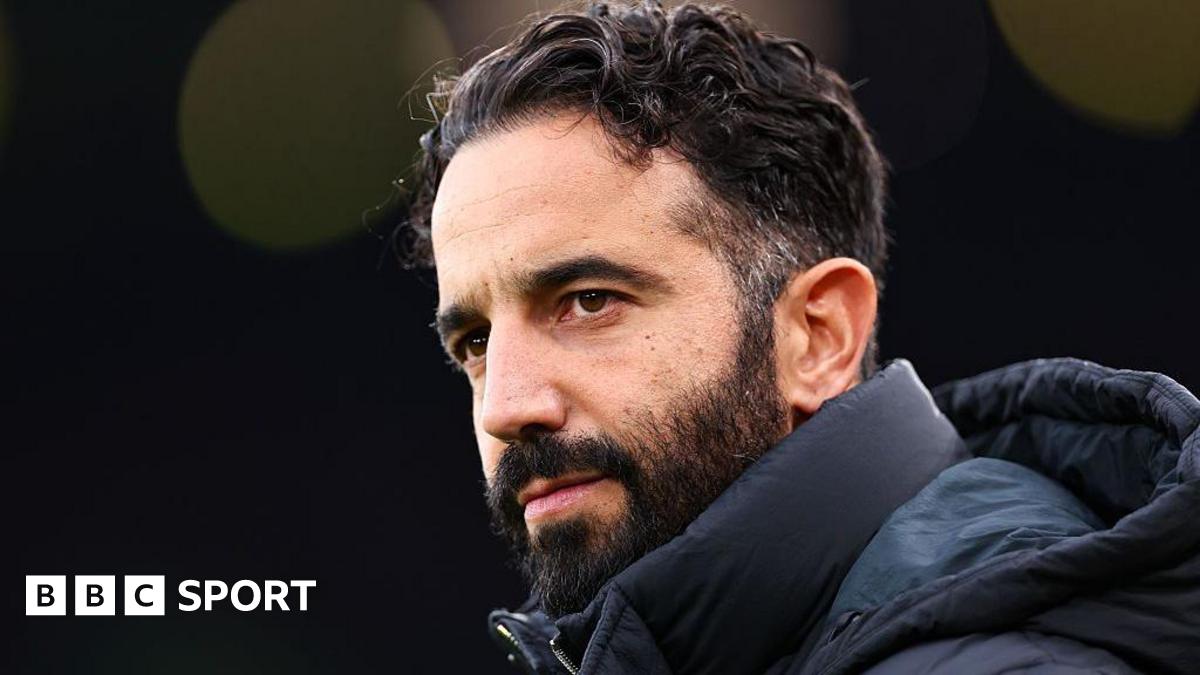

Manchester United have become the Premier League’s greatest entertainers this season, but that spectacle comes with a worrying caveat. Across their 10 league games so far there have been 33 goals in their matches — United themselves have scored 17 and conceded 16. Only once have they kept a clean sheet, and on just three occasions has a game involving them finished with one side failing to score.
Ruben Amorim’s side clearly look a lot more dangerous going forward than in recent seasons: only four clubs have scored more than their 17 league goals. But that attacking progress is matched by defensive fragility. Of the teams in the top half of the table, United have conceded the most; only the five lowest-ranked clubs in the division have let in more than their 16 goals. They have now conceded at least twice in half of their league fixtures and have seven points from ten matches — a return blunted by those defensive lapses.
Amorim admits the number of goals conceded is a problem. Speaking before the trip to Tottenham, he highlighted Nottingham Forest’s 17 shots at the City Ground as symptomatic of the issue. “If you look at the league table, the team that is winning is not suffering goals,” he said, adding that attacking and defending are connected and that the team must be “more aggressive”. He pointed to lapses defending crosses into the box and said the coaching staff had worked on that area during the week.
Former Everton midfielder Leon Osman, who commentated on United’s 2-2 draw with Forest, saw clear improvement overall compared with last season but suggested opposition teams will try to exploit certain vulnerabilities. Forest’s goals both came from crosses early in the second half, one of which beat Amad Diallo in the air after he had started at right wing-back. Osman believes other teams will target similar weaknesses and stressed that finding the correct balance between attack and defence takes time and deliberate work in training. He noted it can be a matter of positioning, attitude and recruitment, and that it might take weeks, months or a whole season to get right.
Tactically there are a few key reasons United are both scoring freely and conceding often. Amorim has generally persisted with three central defenders within a 3-4-2-1 structure this season, and his side have increasingly used goalkeeper Senne Lammens’ long distribution as a launch point. That reduces risky short build-up play, keeps defenders from giving possession away near their own box and allows United to stay compact because the defensive and midfield lines can push up together to win the second ball. This direct approach suits United’s pacey attackers and has worked well against teams who press high, helping United win more second balls and reduce exposure to counter-attacks.
However, that pattern becomes less effective when opponents sit deep. With fewer spaces behind the defence, launching long balls is less likely to produce clear chances and United are instead forced to break teams down through patient play. When United do manage to set up high and press, Amorim has tweaked his pressing shape: the earlier 5-2-3 press sometimes left gaps between midfield and attack, but Luke Shaw has at times been asked to step into midfield when pressing, creating a 4-3-3 shape that helps bridge those spaces. When defending in deeper blocks Amorim has shifted toward a 5-4-1 shape, which provides wider coverage but requires the wide players and full-backs to prevent crosses and protect the back post — an area where United have looked vulnerable.
The consequence of the direct, less-possession-based plan is that United often find themselves defending their box for long periods in a 5-4-1 block. If they can be more proactive from that shape — stepping out to attackers before crosses are delivered and improving box defending and aerial competitiveness — they could reduce the number of goals conceded without sacrificing the counter-attacking threat that brings goals. That will demand better timing on challenges, clearer responsibilities for marking at the back post and possibly more physical or aerial personnel on the flanks and among the centre-backs.
The alternative is to change the emphasis: dominate possession against compact opponents and work patiently to open them up. That minimizes the need to defend long periods inside the penalty area, but it also blunts some of United’s most effective offensive traits — the quick transitions and space-for-speed counters. For Amorim’s system to shift successfully toward greater ball dominance, the team would need to show more reliability in possession, greater creativity in tight areas and consistency in breaking down low blocks, which is not a guaranteed short-term fix.
In practice, the most realistic route is a hybrid: keep the directness that creates goals while drilling defensive patterns that reduce exposure to crosses and second-phase chances. That involves attention to details in training (press triggers, where wing-backs position themselves, who steps to the ball, and marking assignments at the back post), sharper decision-making in critical moments and, if necessary, recruitment of players whose profiles better suit the balance Amorim wants.
Ultimately, this is a solvable problem but not an instant one. Amorim is roughly a year into his tenure and the team is starting to show a clearer identity. Shoring up the defence without diminishing the attack will require tactical tweaks, defensive coaching, and time for players to internalise new responsibilities. If United can improve their box defending and become more proactive in their 5-4-1 block while retaining the pace and directness that creates chances, they stand a good chance of reducing goals conceded without losing their cutting edge. If not, they will have to choose whether to sacrifice a degree of attacking potency for greater solidity — or find the right mix to have both.