
We’re roughly halfway through an unusually chaotic NFL season — no undefeated teams and nine clubs with two losses — which makes projecting final team outcomes risky. Evaluating individuals is easier: we can judge performance over hundreds of snaps rather than extrapolate close-game luck. These midseason awards reflect who’s been best through nine games, not who will win in January. Availability matters: missing multiple games is often disqualifying for a half-season honor unless the on-field play was truly elite.
Defensive Rookie of the Year
1) Abdul Carter, Edge, New York Giants — Carter’s raw sack numbers are modest, but his pressure metrics are dominant. He leads rookies by a wide margin in pressures and quick pressures, and film shows the consistent disruption that will translate to more visible production.
2) Carson Schwesinger, LB, Cleveland Browns — Ran a very high defensive snap rate and led rookies in tackle share. Excellent against the run, but a high-ankle sprain will likely derail his long-term chances even though he was outstanding early.
3) Jacob Parrish, CB, Tampa Bay Buccaneers — Played the slot with physicality and blitz value, producing sacks and tackles for loss on limited pass-rush snaps. A dependable playmaker amid the Bucs’ injury issues.
Notes: Injuries have wiped out several promising candidates (Mykel Williams, Travis Hunter and others), making this a weaker and more fractured rookie class on defense through the midpoint.
Offensive Rookie of the Year
1) Tyler Warren, TE, Indianapolis Colts — A Swiss Army knife: used as runner, wildcat QB, fullback, and primary receiver on play-action concepts. His production (over 500 receiving yards) and high yards-per-route-run for a tight end make him the most fun and effective rookie offense weapon through nine games.
2) Grey Zabel, G, Seattle Seahawks — Rare interior lineman on an OROY ballot because of elite pass-protection and run-blocking marks. Low pressure rates allowed and a top run-block win rate make him foundational to Seattle’s offense.
3) Emeka Egbuka, WR, Tampa Bay Buccaneers — Leads rookies in receiving yards and is tied for rookie touchdown lead. He’s been the Bucs’ go-to threat and has shown downfield explosiveness despite some recent hamstring issues.
Notes: Many offensive rookies missed time (quarterbacks, running backs, tight ends), so production through nine weeks favors those who stayed healthy and were heavily used.
Protector of the Year (Best Offensive Lineman)
1) Dion Dawkins, OT, Buffalo Bills — Handles a difficult job blocking for Josh Allen’s improvisational game. Dawkins faces one-on-one blocks at an unusually high rate and still posts elite quick-pressure marks while missing almost no time.
2) Quenton Nelson, G, Indianapolis Colts — A dominant run blocker who is rarely flagged for penalties. His pulling and movement scheme fit make him a huge reason the Colts’ rushing attack hums.
3) Lane Johnson, OT, Philadelphia Eagles — Still arguably the best lineman on a snap-by-snap basis; availability concerns (games/snaps missed) are the main limitation.
Notes: The new “Protector” award highlights elite linemen across positions; availability and level of assignment difficulty weigh heavily.
Coach of the Year
1) Shane Steichen, Indianapolis Colts — Built an elite offense around Daniel Jones and a physical rushing attack for Jonathan Taylor. The Colts’ points-per-drive numbers are historically impressive through nine weeks; Steichen is getting maximum production from less-heralded pieces.
2) Mike Vrabel, New England Patriots — Turned around a defense that was poor last year and has overseen Drake Maye’s emergence at QB. Defense-first coaching and roster management have vaulted the Patriots into contention.
3) Sean McVay, Los Angeles Rams — Creative offensive adjustments, multi-personnel packages and efficient play-calling have kept the Rams among the NFC’s best despite personnel turnover.
Notes: This is a crowded category — many coaches have legitimate claims this year — but the award tilts toward those who have elevated their preferred side of the ball.
Defensive Player of the Year
1) Myles Garrett, Edge, Cleveland Browns — A dominant tier above the rest right now. Garrett’s sack and pressure rates, tackles for loss, and the amount of help he forces (chips/double teams) make him the clear DPOY frontrunner through nine games.
2) Will Anderson Jr., Edge, Houston Texans — Consistently productive with a great mix of speed and power. A regular sack producer who draws frequent extra attention from opponents.
3) Nik Bonitto, Edge, Denver Broncos — Exploded early and still leads quick-pressure metrics overall. Other pass rushers have closed the gap, but his early surge keeps him in the top three.
Notes: Several expected candidates are injured or underperforming, narrowing the field and making edge rushers the primary group to sort through.
Offensive Player of the Year
1) Jaxon Smith-Njigba, WR, Seattle Seahawks — An absurd yards-per-route-run mark (far and away the best through nine weeks in ESPN’s data), elite separation and big-play after-catch ability. He’s been more than a No. 1 receiver — he’s carried enormous offensive value.
2) Jonathan Taylor, RB, Indianapolis Colts — Leads the league in rushing yards and touchdowns with elite broken-tackle and first-down rates. Taylor’s combination of efficiency and volume makes him a top offensive candidate.
3) James Cook, RB, Buffalo Bills — The most efficient runner in football this season by several measures, leading backs in success rate and exceeding rushing expectations. He’s also a key playmaker near the goal line.
Notes: Puka Nacua and Christian McCaffrey had arguments but availability or inefficiency factors nudged them out of the top three.
Most Valuable Player
1) Patrick Mahomes, QB, Kansas City Chiefs — Not the flashiest statistical season, but Mahomes leads in cumulative EPA and has been the most consistently valuable offensive engine. He’s driving first-down success, adding meaningful scramble value, and has made fewer mistakes than other elite QBs in the tightest margins.
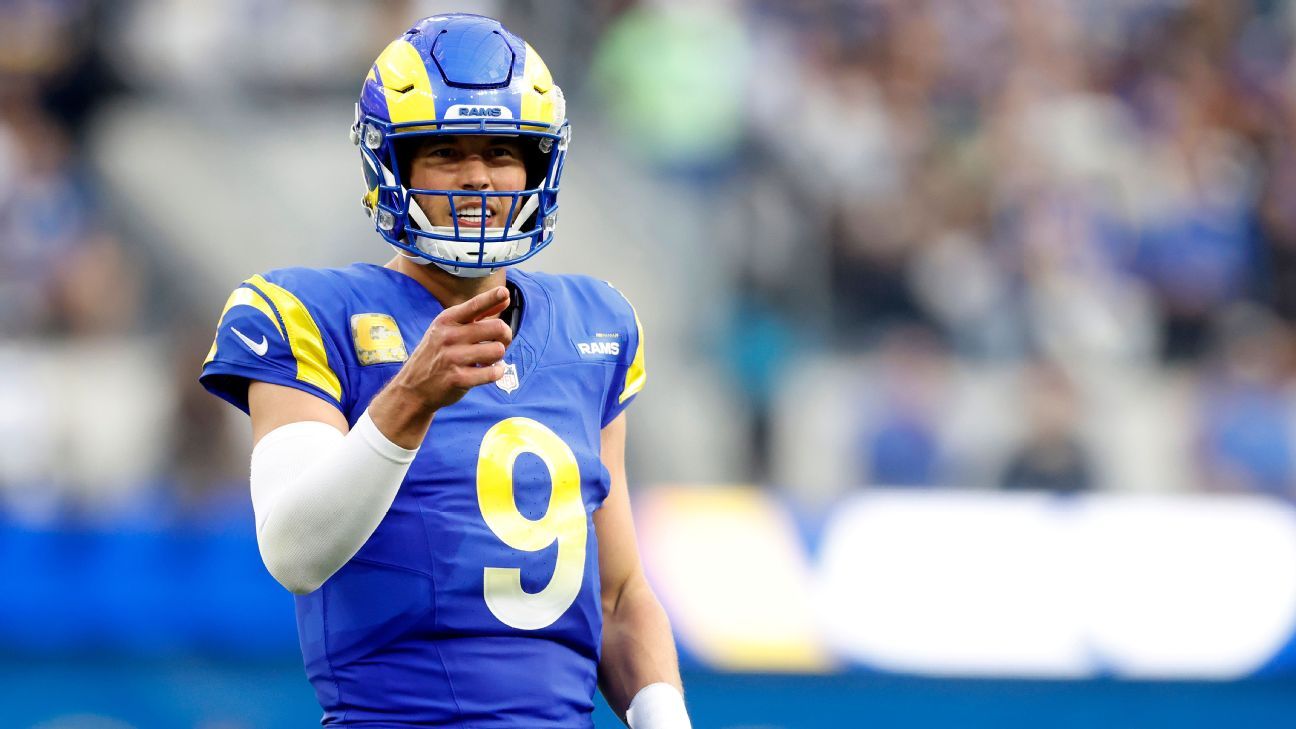
2) Matthew Stafford, QB, Los Angeles Rams — Veteran precision and an exceptional red-zone touchdown rate make Stafford extremely valuable. He has very low sack rates and has been surgical when it matters.
3) Sam Darnold, QB, Seattle Seahawks — Strong advanced metrics (completion percentage over expectation, yards per attempt) and excellent production within Klint Kubiak’s scheme push Darnold into the top three, though scheme fit and supporting cast are part of his success.
Honorable mentions: Drake Maye, Jalen Hurts, Josh Allen, Jordan Love, Daniel Jones and others each have compelling cases; the quarterback landscape is crowded this season. The MVP decision here favors the player who carries the heaviest overall offensive burden while minimizing mistakes — Mahomes just nudges ahead at midseason.
Final note: These are half-season snapshots. Injuries, role changes and variance can rapidly alter trajectories. This ballot rewards what we’ve actually seen through nine games rather than projecting the full season outcome.