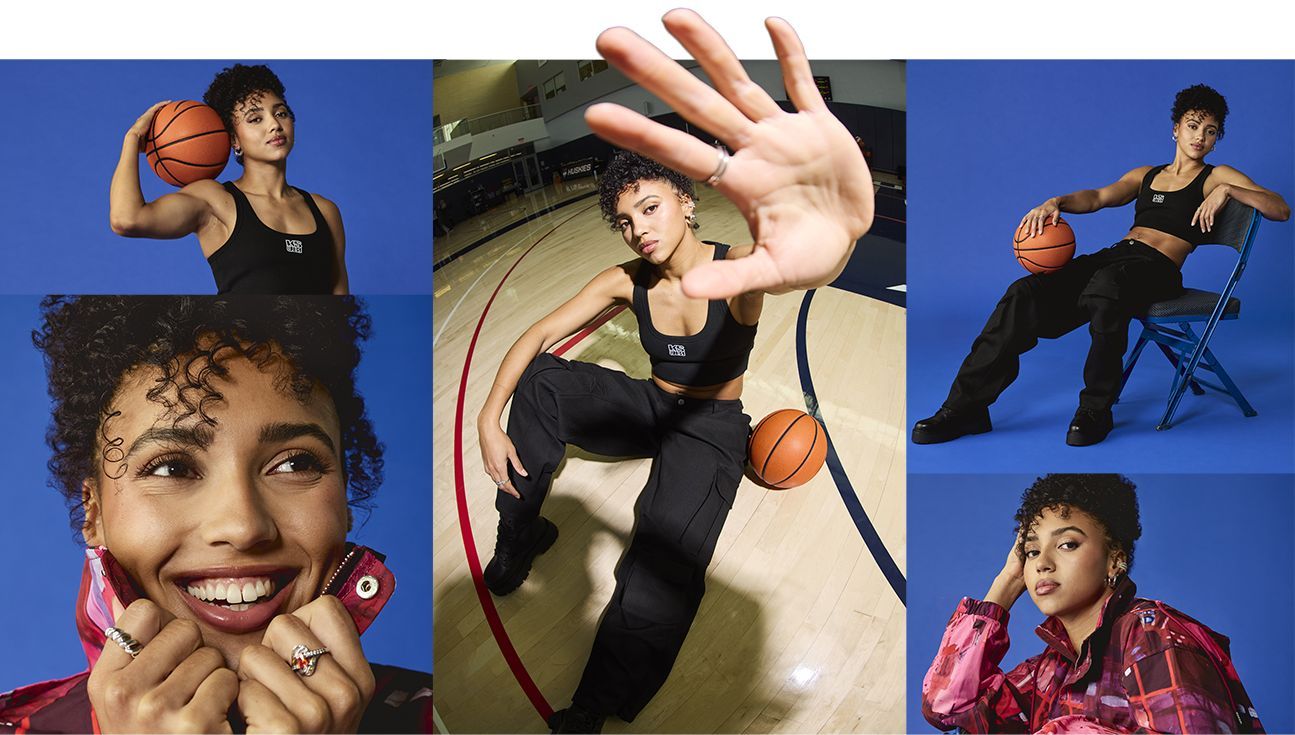

Azzi Fudd fumbles through a new card game called Dinger on an October morning at UConn’s practice facility, smiling as she consults my handwritten instructions. In gray sweatpants and a pink sweatshirt, she talks about summers playing Uno at her grandparents’ lake house in Minnesota and how she learned Spades last year waiting in an airport in China next to Stephen Curry. She squints at her hand, lays down cards, and announces, “Done,” with the same calm that has marked her comeback season.
Fudd is the 5-foot-11 guard who helped lead UConn to its 12th national championship last spring and earned Final Four Most Outstanding Player honors. Since then she’s been to New York Fashion Week, launched a podcast, taken a family cruise and rubbed shoulders with Curry overseas. But mostly she spent the offseason the way she always does: in gyms, grinding on the tiny details of her craft.
After three injury-plagued seasons that limited her to 42 games, Fudd returned for a healthier fourth season and decided she wasn’t ready for the WNBA. In March, at her grandparents’ cottage near campus, she told her parents through tears that she wanted to stay in Storrs — to keep building her game and her confidence rather than jump to the professional ranks.
Coach Geno Auriemma had asked the hard questions: did she want the jump to the league now or more time in college? Fudd’s answer was simple. “I’m not ready,” she told him. She hadn’t played enough to feel certain she could thrive at the highest level.
The missed time and repeated rehabs had taken a toll. There were stretches last season when Fudd didn’t enjoy playing. She described feeling tentative, not trusting her knee, hesitant to take shots and sometimes disappearing for stretches of games. Her parents had watched versions of that before — the awkward senior-year hiccups back in high school that prompted tough love and hard conversations.
What changed, her family says, was a decision to stop hiding from the doubt. In the NCAA tournament she averaged 17.5 points and 3.0 steals, shot 44.4 percent from deep and delivered when it mattered, including 24 points in the national title game. That tournament Azzi was a glimpse of the player her father had always believed in — and he believes the full version is still ahead.
A month after the title, Fudd was in New York training with Chris Brickley, running a punishing corner-to-corner drill that mixes conditioning, shooting and one-on-one play. Brickley, who trains NBA stars and other elite players, made her run the sequence repeatedly until she broke through and posted a high score. “That takes some mental toughness,” he says. Brickley and Brandon Payne, who also worked with her as a high school standout, say her work ethic and competitiveness in the gym are elite.
That competitiveness is not new. As a high school sophomore she was already competing and scoring against boys at elite camps, and she became the first sophomore to win Gatorade National Player of the Year. But injuries — an early foot problem, knee aggravations, and a torn ACL and medial meniscus in her junior year — created a narrative of potential interrupted. Coaches and trainers say the physical tools are obvious; the missing piece has been consistent game time.
To get the mental edge back, Fudd began writing affirmations before games, typing reminders in her phone’s Notes app: I can do this. I’m good at this. I’m going to do this. She also started working with a sports psychologist and learned to notice and analyze mistakes without judging herself. Instead of spiraling after a missed shot she now asks practical questions: Was it long or short? Did she get enough lift? How can she tweak her mechanics next time?
Those adjustments have helped her play more freely. A confidence-boosting trip to China with Curry — running his camp and taking part in CurryCon — reminded her that fans know and appreciate her game. That external validation, Brickley says, often translates to better performances on the court: when Azzi is healthy and in a good headspace, he believes few in women’s basketball can match her shooting.
Off the court, Fudd cherished a family cruise last summer that finally brought everyone together for dinners and downtime. She teased her sister into dressing up and relished a normal, unplugged stretch before returning to training and commitments.
Looking ahead, the WNBA is in her future, but the timing is uncertain. Collective bargaining talks could delay or reshape the draft. Scouts project her as a lottery candidate — ESPN mock drafts placed her near the top picks — but one premise of her decision to stay was to enter the league in a state where she felt fully prepared.
Back in Storrs this fall, teammates and coaches have noticed changes. In an exhibition, Fudd jogged into a catch-and-shoot from NBA range early in the game and confidently hit a 3 minutes later. Teammate Sarah Strong says Azzi came back assertive and unhesitant, more willing to ask for the ball and to speak up. Auriemma notes that guards who previously benefited from veteran teammates will now have to assume leadership roles; for Fudd, that means more ball-handling in late-game moments and more reads under pressure.
The card game with its trash talk and laughter is a small portrait of the bigger arc: a player who has rebuilt herself quietly and now wants to be more visible. During our match, Fudd changes suits, draws cards and accuses me of cheating with a grin. Time runs out before either of us finishes, and she leaves frustrated but smiling. “It would’ve been more fun,” she tells me, “if I beat you.”
That mix of competitiveness, playfulness and a newly steady confidence is exactly what UConn needs as it chases a repeat title. It’s also the version of Azzi Fudd her father insists most people haven’t yet seen. If she can stay healthy and sustain the Final Four form she flashed, this season could finally let the wider world see the full player she’s been building toward.